The self-employed stress meter
Your health only comes in 10th.
Twenty-two events in an entrepreneur’s life, ranked from most to least stressful. The top three are about money. Your own health comes right behind unpaid invoices.
Manage your health like your wealth.
From age 40, your body changes, and it doesn’t warn you. Hormones shift, in women and men alike. Blood pressure or cholesterol can rise without the slightest symptom. It’s time to move to real follow-up.
When you work for yourself, no one will do it for you: no occupational health service, no colleague to take over. This guide, written for self-employed women and men over 40, helps you take stock in five minutes, then act on what matters.
Guide designed with the Ikare medical team.
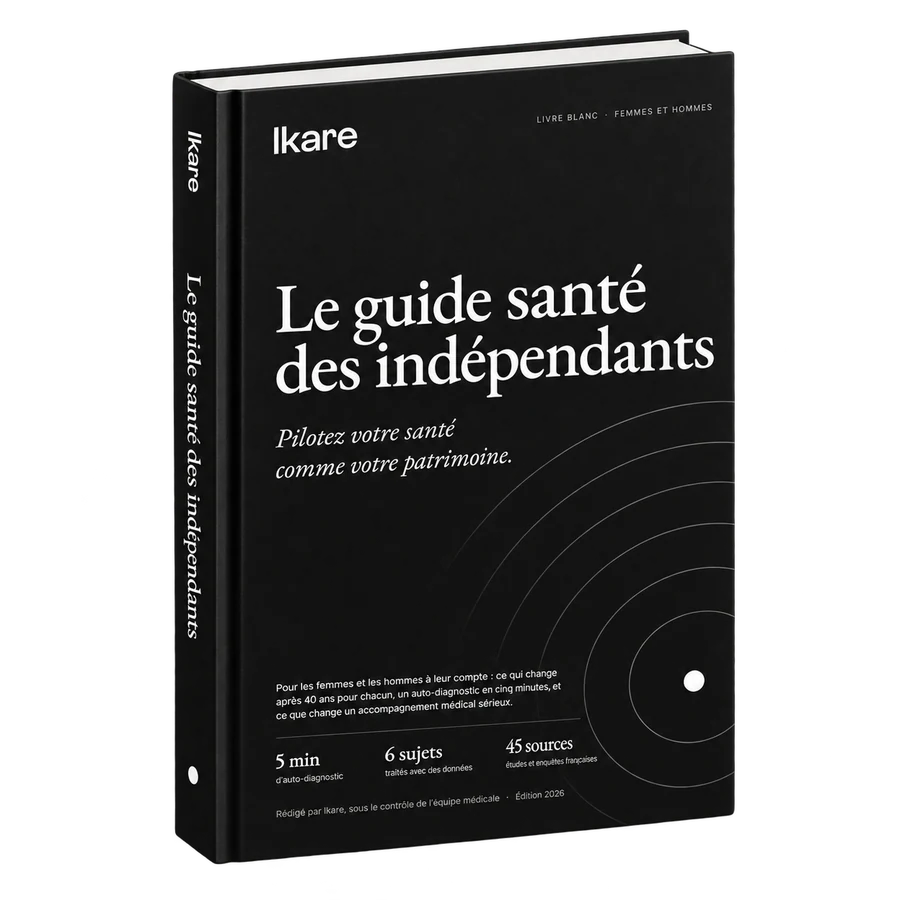
Figures taken from the guide, where each one is sourced: Insee, enquête Emploi 2023; Ifop for Welfaire, 800 self-employed professionals, February-March 2026; Harmonie Mutuelle, guide “À votre santé !”, 2024.
The self-employed stress meter
Twenty-two events in an entrepreneur’s life, ranked from most to least stressful. The top three are about money. Your own health comes right behind unpaid invoices.
What time off costs
3 days
waiting period, then at most €65.84 gross per day for a micro-entrepreneur
For a day billed at €400, four weeks off work means €8,000 less in revenue.
Self-assessment
Fifteen questions about the past month, five themes. Your score tells you which topic to start with, then the guide gives you the concrete levers.
“The rules that govern financial capital are the same as those of health capital.”
Gabriel Cian, partner at Ikare, speaking on La Martingale
Free, as a PDF, a thirty-minute read. Or five, if you’re short on time.