



How long to fast, what you can drink, the tests that require it and those that do not. And what to do if you had a coffee out of habit.
A member of the team calls you back. Free, no commitment.
- 8 to 12 hoursThe usual fasting time
- Water is allowedCoffee and tea are not
- No more than 14 hoursFasting too long also skews results
- In the morning, before 10 a.m.The time that works for everything
Key points
- Fasting for a blood test means having eaten nothing and drunk nothing but water for 8 to 12 hours. The overnight fast is enough.
- Glucose, insulin, the lipid panel and serum iron are measured fasting. The CBC, TSH, ferritin, CRP, HbA1c and creatinine do not require it.
- Still water is allowed. Coffee and tea, even without sugar, cigarettes and chewing gum should be avoided before the blood draw.
- Take your medications as usual, unless your doctor or the lab tells you otherwise. People with diabetes should ask their doctor before fasting.
- If you have eaten or had a coffee, tell the phlebotomist: some of the tests remain valid, the others will be postponed.
Updated November 12, 2026 · Sources
What does fasting for a blood test mean?
Fasting means having eaten nothing and drunk nothing but water for at least 8 hours, and most often 12 hours. The overnight fast is enough: you have a normal dinner the night before, skip breakfast, and have your blood drawn in the morning.
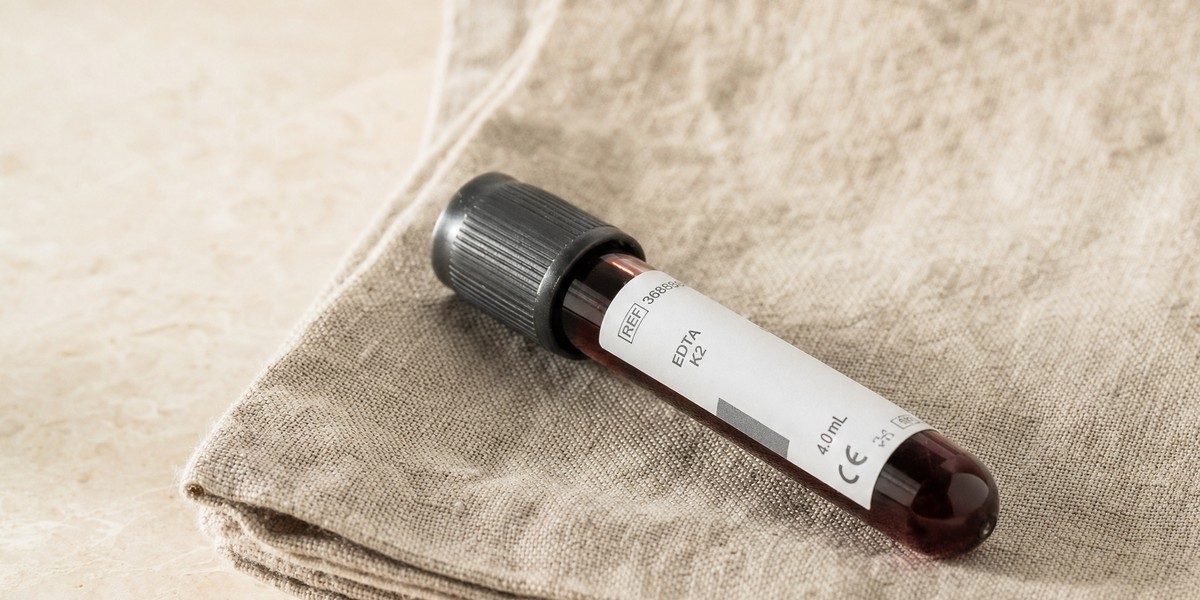
What you eat passes into your blood. After a meal, sugar rises, then fats, for several hours. If the blood draw takes place at that point, the lab measures your meal, not your baseline. Fasting makes it possible to compare like with like: your result with the reference values, and today’s result with last year’s.
The fast does not need to be long. Beyond 14 hours, it even becomes counterproductive: the body draws on its reserves and some results move the other way. So there is no need to skip dinner.
Not every test requires fasting. But a lab order often combines several tests, and it only takes one that requires it. That is why labs recommend, by default, coming in fasting in the morning.
How many hours should you fast before a blood test?
Allow at least 8 hours for glucose and insulin, and 12 hours when a lipid panel is on the lab order. Do not go beyond 14 hours. In practice: last meal around 8 p.m., blood test between 7:30 and 9 a.m.
| Test | Fasting time | Why |
|---|---|---|
| Fasting glucose | At least 8 hours | Blood sugar rises after every meal; diabetes thresholds are defined in the fasting state |
| Insulin, HOMA index | 8 to 12 hours | Insulin follows sugar: it can only be interpreted fasting |
| Lipid panel (cholesterol, triglycerides) | 12 hours, requested most often | Triglycerides stay high for several hours after a meal |
| Oral glucose tolerance test (OGTT) | 8 to 12 hours | The test compares blood glucose before and after a dose of sugar |
| Serum iron | Fasting, in the morning | Iron varies over the course of the day and after meals |
If your lab order does not specify anything, call the lab or check its preparation sheet: each lab publishes its own instructions, and they can differ slightly.
The case of the lipid panel
Since 2016, the European cardiology and laboratory medicine societies have considered that a lipid panel can be done without fasting in most situations: total cholesterol, HDL and LDL change little after a meal. In France, most labs still ask for 12 hours, notably because triglycerides do rise markedly, and LDL is often calculated from them. Follow your lab’s instructions: that is what keeps your panels comparable with one another.
Which tests require fasting, and which do not?
Glucose, insulin, the lipid panel and iron are measured fasting. The CBC, TSH, ferritin, CRP, creatinine, HbA1c, vitamin D and PSA can be measured at any time. Some hormones depend on the time of day more than on meals.
| Test | Fasting? | Details |
|---|---|---|
| Blood glucose | Yes | At least 8 hours |
| Insulin | Yes | Always with glucose, on the same blood draw |
| Lipid panel, LDL, triglycerides | Yes, most often | 12 hours requested by most labs |
| Serum iron, transferrin saturation | Yes, preferably | In the morning |
| CBC (complete blood count) | No | A meal does not change the number of cells |
| TSH and thyroid hormones | No | If you take thyroid medication, ask whether to take it before or after the blood test |
| Ferritin | No | It reflects your stores, which are stable from one meal to the next |
| CRP and high-sensitivity CRP | No | |
| HbA1c | No | It summarizes blood glucose over the past three months |
| Creatinine, eGFR | No | Avoid a very meat-heavy meal the evening before and intense exercise |
| Transaminases, GGT | No, in principle | No alcohol in the previous 24 to 48 hours |
| Vitamin D, B12, folate | No | |
| PSA | No | Avoid cycling and sexual intercourse in the 48 hours beforehand |
| Cortisol | Depends on the time | Blood draw at a set time, generally around 8 a.m. |
| Testosterone | In the morning | The level drops over the course of the day |
| Prolactin | In the morning, at rest | Stress and exertion raise it |
This table gives the general rule. Your lab may have its own instructions, depending on the method it uses. When in doubt, come in fasting: it does not skew any of these tests.
Water, coffee, cigarettes, medications: what are you allowed to have?
Still water is allowed and even recommended. Coffee, tea, juice, milk and soda break the fast, even without sugar. Cigarettes and chewing gum should be avoided. Take your medications as usual, unless told otherwise.
| Allowed? | Explanation | |
|---|---|---|
| Still water | Yes | Drinking makes veins easier to find and does not change the results |
| Coffee or tea, even without sugar | No | Caffeine acts on sugar and on certain hormones; with milk or sugar, the fast is broken |
| Fruit juice, milk, soda, “zero” drinks | No | They provide sugar or stimulate digestion |
| Cigarettes, e-cigarettes | No | Nicotine alters blood glucose and several hormones |
| Chewing gum, candy | No | Even sugar-free, they trigger digestion |
| Brushing your teeth | Yes | Without swallowing the toothpaste |
| Regular medications | Yes, unless told otherwise | Mention them to the phlebotomist, with the time you took them |
| Dietary supplements | Mention it | Biotin (vitamin B7) can skew several hormone tests |
If you have diabetes
Do not shift your treatment or fast on your own initiative. Ask your doctor how to adjust your insulin or tablets that morning, book the earliest possible appointment, and keep something on hand to raise your blood sugar. Tell the lab when you arrive.
If you are pregnant, older, or if fasting makes you feel faint
Say so when you book. The lab will see you first. Bring a snack to eat right after the blood draw.
What should you do the day before and the morning of the blood test?
The day before, have a normal dinner, without alcohol, and avoid intense exercise. In the morning, drink water, do not smoke, and arrive without rushing. Stay seated for a few minutes before the blood draw.
- 48 hours before: no excess alcohol. It raises triglycerides and GGT.
- The day before: no intense workout. Sustained effort releases muscle enzymes (CK, AST, LDH) that stay elevated for one to two days.
- Dinner: your usual, neither a feast nor a diet. Finish it twelve hours before the time of the blood draw.
- The night: a normal night. Lack of sleep alters cortisol and blood glucose.
- In the morning: one or two glasses of water, no coffee, no cigarettes, your medications as usual unless told otherwise.
- At the lab: your lab order, your Carte Vitale (French health insurance card), the list of your medications. For women, the date of your last period if hormones are being measured.
- Afterward: eat. Press on the puncture site for two to three minutes, without bending your arm, to avoid a bruise.
To track a biomarker over time, repeat your blood tests under the same conditions: same lab, same time, same fasting duration. That is what makes two panels comparable.
How does the blood draw work?
A poorly observed fast skews several lines of the panel. At Ikare, the blood draw is scheduled in the morning, at your home, so conditions stay the same from one measurement to the next.
The blood draw at your home
The kit is delivered to your home. The nurse comes in the morning, keeps to the agreed time and draws your blood on site, fasting depending on the tests ordered.
The results consultation
About a month later, your dedicated doctor goes over your results by video call and points out the lines that fasting may have influenced.
The monthly follow-up
The plan is adjusted every month. A question about a specific test? The medical messaging service answers.
The six-month check
A second blood test, under the same conditions, makes it possible to compare like with like.
The twelve-month review
The twelfth-month results are set beside the first ones, line by line.
A question about fasting before your blood draw? We’ll call you back. Free, no commitment.
What should you do if you ate or had a coffee before the blood test?
Tell the phlebotomist. Depending on the tests ordered, they will draw your blood and note the time of your last meal, or suggest you come back. Do not hide it: a skewed result can lead to repeat tests, or to a wrong diagnosis.
A black coffee taken out of habit does not make the whole blood test useless. The CBC, TSH, ferritin or creatinine remain valid. It is glucose, insulin and triglycerides that become hard to interpret. The lab can then run some of the tests and postpone the others.
The lab report often states whether the patient was fasting. This matters to the doctor: a blood glucose of 1.15 g/L does not mean the same thing fasting and an hour after a croissant.
Note too that high blood glucose is not enough, on its own, to speak of diabetes. The diagnosis rests on a fasting glucose equal to or above 1.26 g/L, found on two occasions. An abnormal result is always rechecked.
How does the blood test work with Ikare?
A nurse comes to draw your blood in the morning, at your home or your office, so the overnight fast is enough. You can also choose a partner lab. Saliva and urine samples are collected the same morning.
- No travel: the appointment is set with you and confirmed by text message and email.
- No prescription to ask for: your dedicated Ikare doctor orders the tests.
- More than 90 biomarkers from a single blood draw, chosen according to your age and sex. The list is on the What we measure page.
- A review by a doctor, by video call, about four weeks later, then a second blood draw in the sixth month, under the same conditions.
To find out what a panel contains and how much it costs, read our guide to the complete blood panel. To understand the lab report, read how to read your blood test.
When do you need to fast? The guide has the answer.
How many hours, which tests, whether you can drink water or coffee, and what to do if you have eaten. Free, sent by email.

Your check-up starts here.
We would be delighted to talk with you and answer your questions. By phone or on WhatsApp:
+33 7 66 72 57 31Let’s talk about your health.
Leave us your contact details: a member of the Ikare team calls you back at the time that suits you.
Book a free call Chat on WhatsAppFree, no commitment.
Sources
- Nordestgaard BG et al. Fasting is not routinely required for determination of a lipid profile. European Heart Journal, 2016. doi.org/10.1093/eurheartj/ehw152
- Haute Autorité de santé. Guide du parcours de soins : diabète de type 2 de l’adulte. has-sante.fr
- Assurance maladie. Analyses de biologie médicale. ameli.fr
- Mach F et al. 2019 ESC/EAS Guidelines for the management of dyslipidaemias. European Heart Journal, 2020. doi.org/10.1093/eurheartj/ehz455
This guide is general information. It replaces neither a consultation nor the advice of your primary care doctor. In an emergency, call 15 or 112.
Further reading
- Complete blood panel: list of tests, prices, fasting
- Reading your blood test: abbreviations and reference ranges
- Comprehensive health check-up: price and where to get one
- Fasting glucose: normal level and thresholds
- Fasting insulin: normal level and HOMA
- LDL cholesterol: normal level and targets
- The 90+ biomarkers of the Ikare check-up