




Sleep, strength, fasting, cold plunges, supplements: sorted by level of evidence, the risks, and the method for making progress without fighting the wrong battle.
A member of the team calls you back. Free, no commitment.
- 5 proven basicsSleep, endurance, strength, diet, tobacco
- No supplementHas extended life in humans
- One thing at a timeFor three to six months
- Two measurementsBefore and after, to know
Key points
- Biohacking covers the practices by which people try to improve their own health and longevity, by measuring and experimenting on their own body.
- The best-proven practices are sleep, endurance and strength activity, a minimally processed diet, quitting smoking and moderating alcohol.
- Intermittent fasting, sauna, cold plunges and “longevity” supplements rest on moderate to weak evidence. No supplement has extended life in humans.
- The main risks are self-medication, notably with hormones or off-label drugs, and overdiagnosis from piling up tests.
- The method that works: a baseline check-up read by a doctor, one or two priorities, one change at a time, then a new measurement.
Updated November 12, 2026 · Sources
What is biohacking?
Biohacking refers to all the practices by which people try to improve their own health, energy or longevity, relying on measurements and experiments on their own body. It ranges from simple sleep tracking to taking compounds without medical advice.
The word comes from Silicon Valley culture: applying to the body the logic of the computer tinkerer, who tests, measures and adjusts. A biohacker wears a sleep tracker, weighs themselves, logs what they eat, tries fasting or cold plunges, and watches what changes.
Behind the same word, there are two worlds. The first is sensible: sleep better, move more, eat less processed food, and check with measurements that it works. The second is risky: supplements by the dozen, hormones, drugs diverted from their intended use, bought online and taken without supervision.
So the right question is not “should you do biohacking?” but “what is proven, what is measured, and who interprets it?”
Which biohacking practices are proven?
The best-demonstrated practices are the least spectacular: enough regular sleep, endurance and strength exercise, a minimally processed diet, quitting smoking and moderating alcohol. Trendy techniques rest on much thinner evidence.
| Practice | Level of evidence | What we know |
|---|---|---|
| 7 to 8 hours of sleep, at regular times | Strong | Associated with less cardiovascular disease, diabetes and mood disorders |
| Endurance and cardiorespiratory fitness (VO2 max) | Strong | One of the best predictors of life expectancy |
| Strength training | Strong | Protects muscle, bone and metabolism; grip strength predicts mortality |
| Mediterranean-style diet | Strong | Reduces cardiovascular events in trials |
| Quitting smoking, less alcohol | Strong | The biggest gain at any age |
| Intermittent fasting | Moderate | Leads to as much weight loss as standard calorie restriction, no more |
| Sauna | Moderate | Associated with less cardiovascular disease in Finnish cohorts; no trials |
| Cold plunges, cryotherapy | Weak | Effects on recovery and mood; no proven effect on longevity |
| Continuous glucose monitor without diabetes | Weak | Interesting for understanding your meals; no proven health benefit |
| “Longevity” supplements (NMN, resveratrol) | Weak | Results in animals, not in humans |
| Red light, nootropics | Weak | Small, contradictory studies |
| Metformin, rapamycin, hormones without a medical indication | Risky | Drugs with side effects, with no proven benefit in healthy people |
This table does not say the practices at the bottom are useless. It says we do not know. And that it would be a shame to invest in a €3,000 chamber while sleeping six hours a night.
What should you measure when you do biohacking?
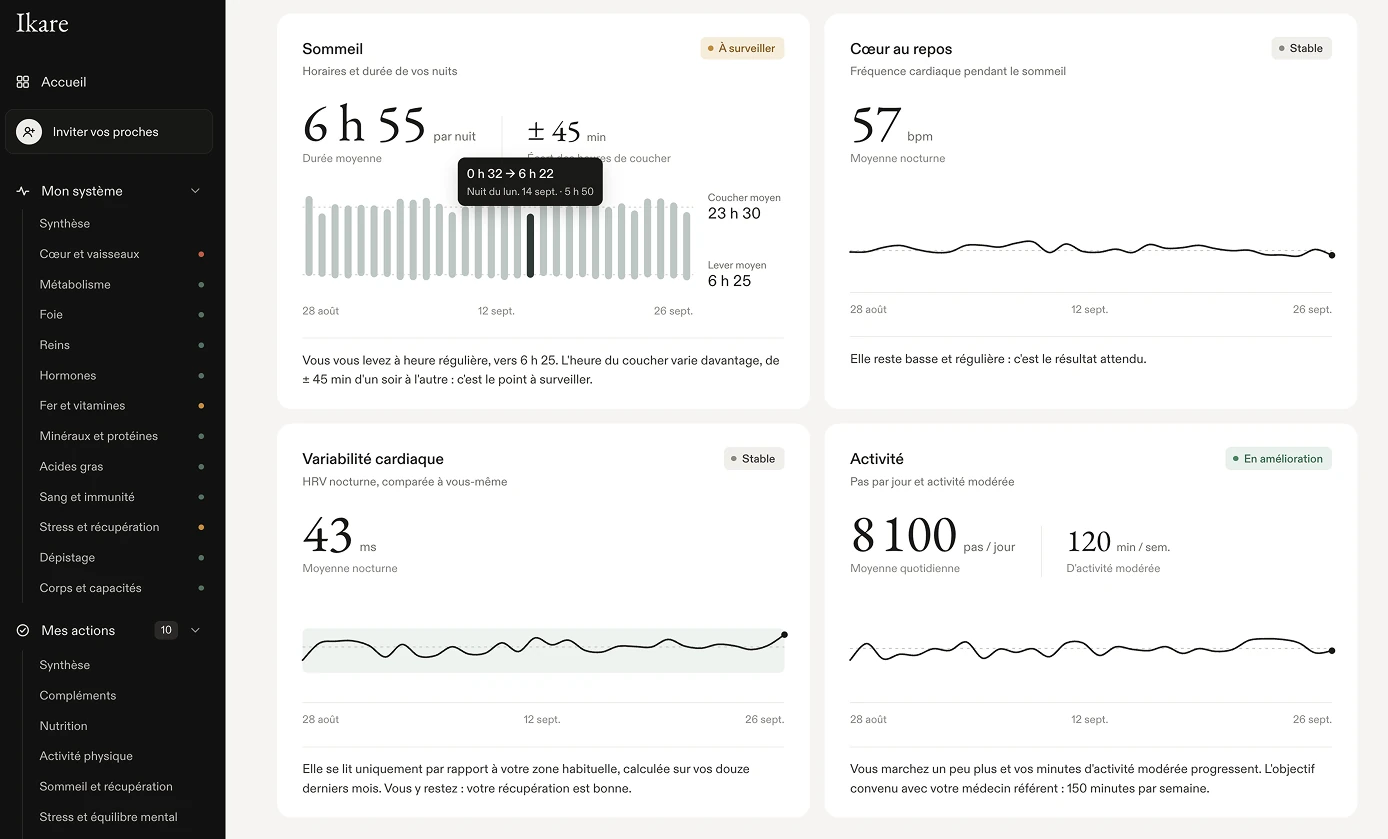
What truly predicts future health: blood pressure, waist circumference, lipids including ApoB, glucose and insulin, inflammation, strength, cardiorespiratory fitness and sleep. A baseline check-up, then the same check-up a few months later.
- In the blood: ApoB, Lp(a), HbA1c, fasting insulin, high-sensitivity CRP, ferritin, vitamin D, hormones.
- On the body: blood pressure, resting heart rate, waist circumference, grip strength.
- Day to day: sleep duration and regularity, heart rate variability, activity.
Measuring is not enough. Three traps await the biohacker. The first is changing five things at once, which makes the result unreadable. The second is watching too many numbers and worrying about deviations that do not matter. The third is interpreting alone: an “out-of-range” value is not always a problem, and a “normal” value is not always reassuring, as our guide on reading your blood test explains.
What are the risks of biohacking?
The main risks are self-medication, piling up supplements, unnecessary tests that trigger false alarms, and the anxiety that comes with constant tracking. The most serious is taking, without supervision, drugs or hormones meant for sick people.
- Supplements are not harmless: vitamin D or iron overdose, interactions with medications, quality that varies from one manufacturer to another.
- Hormones and drugs taken off-label, such as testosterone, metformin or rapamycin, have real side effects for an unproven benefit.
- Overdiagnosis: the more tests you run on a healthy person, the more inconsequential abnormalities you find.
- Obsession: when the morning sleep score decides the mood of the day, the tool has become the problem.
- Extreme restrictions: prolonged fasts or very strict diets can lead to deficiencies and eating disorders.
Who interprets your results? Your doctors, over the long term.
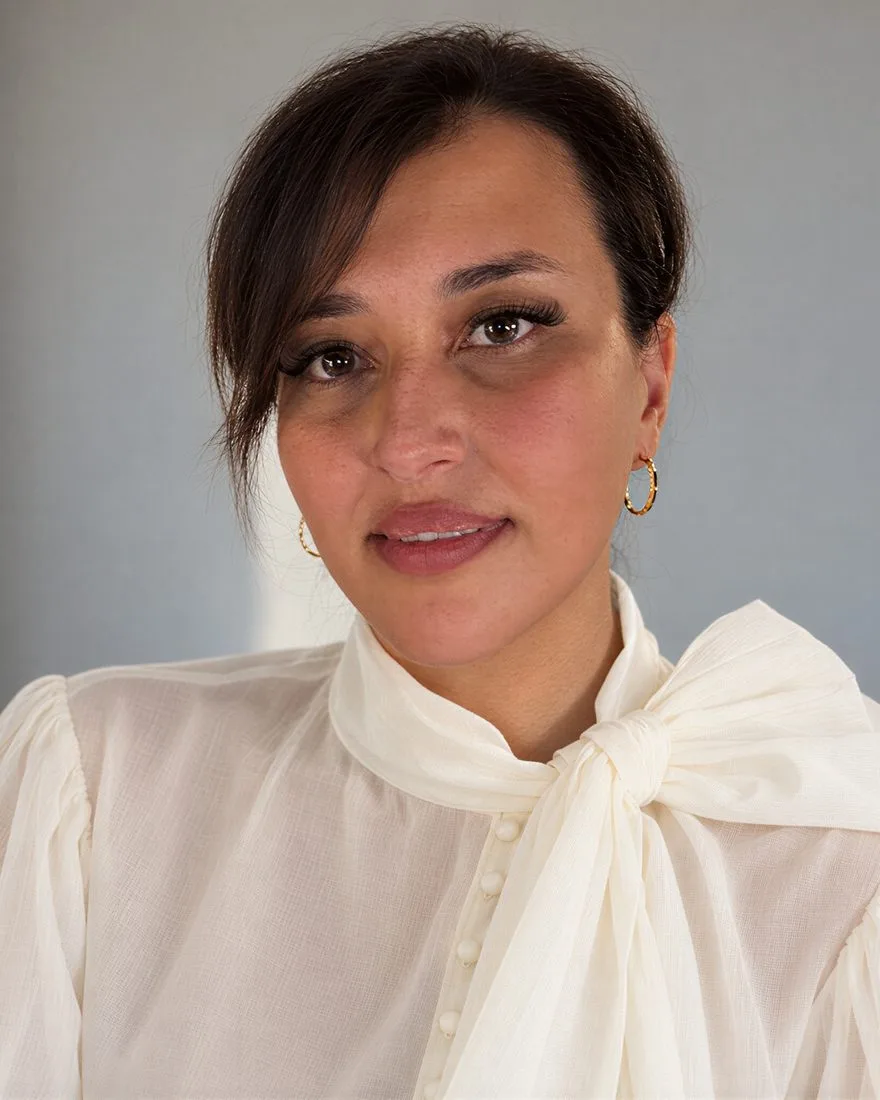
Your results are read by a doctor registered with the French Medical Council, who follows you from one check-up to the next. Your doctor can prescribe additional tests and refer you to the right specialist if a result calls for it.
Around your doctor, a nutritionist and a fitness and wellness coach turn the recommendations into concrete actions. If your doctor were to leave, a colleague takes over your file with your full history. Our medical standards

How do you do biohacking seriously?
By following a simple method: measure a starting point, choose one or two priorities with a doctor, change one thing at a time for three to six months, then measure again. It is less exciting than a ten-supplement routine, and far more effective.
- 1. Get a baseline check-up, a broad one, interpreted by a doctor. Our guide to the complete blood panel details what it should contain.
- 2. Get the basics right before anything else: sleep, activity, diet, alcohol.
- 3. Target what your results point to, not what a podcast recommends.
- 4. Change one thing at a time, long enough to see its effect.
- 5. Measure again, under the same conditions.
How do you measure before you optimize?
Serious biohacking starts with a measurement, not with a protocol found online. At Ikare, that measurement opens a year of follow-up, with a checkpoint.
The baseline measurement
The kit arrives, the nurse draws your blood in the morning at your home or office. Without a measured starting point, no protocol can be evaluated.
Sorting the priorities
About a month later, your dedicated doctor rules out practices without evidence and keeps the two or three levers that apply to you.
Continuous adjustment
Every month, what works is kept, what does nothing is dropped. The medical team answers between check-ins.
The six-month check
A second at-home blood test measures the real effect of the changes, not the perceived effect.
The twelve-month review
The tests are repeated: you know what your protocol has changed, and what it has not.
Want a protocol backed by measurements? We’ll call you back to talk about it. Free, no commitment.
How is Ikare different from biohacking on your own?
Ikare provides what solo biohacking lacks: a doctor registered with the French Medical Council who interprets and sets the priorities, a check-up of more than 90 biomarkers, and a second blood draw at six months that shows what has really changed. All at home, with health coaching every month.
| Solo biohacking | Ikare | |
|---|---|---|
| Who chooses the measurements | You, based on what you read | A doctor, according to your age and sex |
| Who interprets | You, or an app | A doctor registered with the French Medical Council, on a video call |
| What is measured | Often sleep and a few blood tests | 90+ biomarkers, seven tests, biological age, connected wristband |
| The priorities | Everything at once | A few actions, explained and ranked |
| Proof that it works | An impression | A second blood draw at six months, read beside the first |
| If a result is abnormal | Online searches | Additional tests ordered, referral to a specialist |
The concrete benefits
- A doctor decides. The tools organize your results; they make no diagnosis and no recommendation. It is the doctor who signs off.
- Nothing to organize. A nurse comes to your home or your office, anywhere in France.
- Twelve months of follow-up. Health coaching every month on diet, activity, sleep and stress, and messaging with the medical team.
- Your data stays yours. It is hosted in France by a provider certified for health data, and is never shared with an employer or an insurer.
What Ikare does not do
Ikare does not sell supplements, does not prescribe “anti-aging” treatments and does not replace your primary care doctor. If you are looking for an experimental protocol, this is not the right place.
Optimize without getting it wrong? Start with the guide.
Practices ranked by level of evidence, the ones that are a waste of time, and what to measure before you start. Free, sent by email.

Measure first, optimize second.
We would be delighted to talk with you and answer your questions. By phone or on WhatsApp:
+33 7 66 72 57 31Let’s talk about your health.
Leave us your contact details: a member of the Ikare team calls you back at the time that suits you.
Book a free call Chat on WhatsAppFree, no commitment.
Sources
- Estruch R et al. Primary prevention of cardiovascular disease with a Mediterranean diet. New England Journal of Medicine, 2018. doi.org/10.1056/NEJMoa1800389
- Leong DP et al. Prognostic value of grip strength: findings from the PURE study. The Lancet, 2015. doi.org/10.1016/S0140-6736(14)62000-6
- Mandsager K et al. Association of cardiorespiratory fitness with long-term mortality. JAMA Network Open, 2018. doi.org/10.1001/jamanetworkopen.2018.3605
- Laukkanen T et al. Association between sauna bathing and fatal cardiovascular and all-cause mortality events. JAMA Internal Medicine, 2015. doi.org/10.1001/jamainternmed.2014.8187
- Liu D et al. Calorie restriction with or without time-restricted eating in weight loss. New England Journal of Medicine, 2022. doi.org/10.1056/NEJMoa2114833
This guide is general information. It replaces neither a consultation nor the advice of your primary care doctor. In an emergency, call 15 or 112.
Further reading
- Zoī review: the Zoī clinic in Paris, check-up prices
- Lucis review: prices, check-up and customer reviews
- Biological age: how to calculate it, what the result is worth
- Healthspan: living long in good health
- Functional, integrative, anti-aging medicine: the differences
- Complete blood panel: list of tests, prices, fasting
- Health coach: role, price and limits
- The 90+ biomarkers of the Ikare check-up